A First Visit to an Outdoor Summer Performance
A first visit to an outdoor summer performance feels easier with a simple plan for preparing for changing sound, weather and audience rhythms.
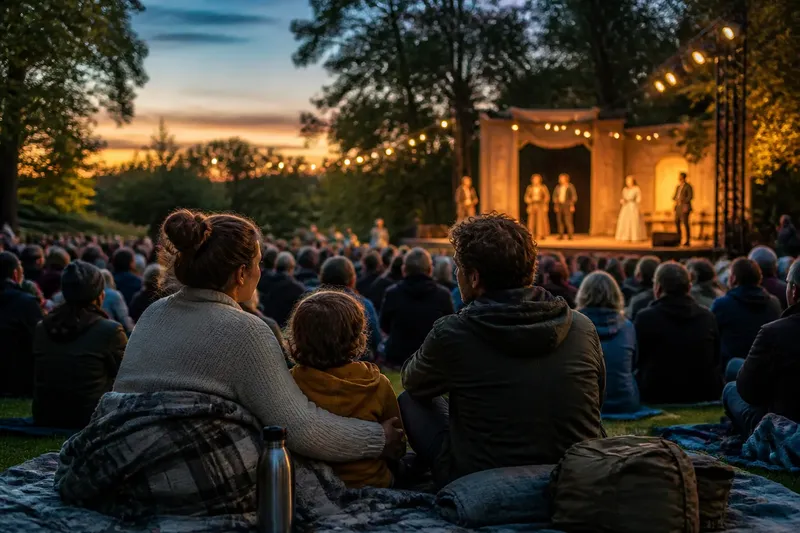
The first line of an outdoor summer performance can arrive just as a breeze stirs the trees and a latecomer rustles a coat behind you. If this is your first visit to an outdoor summer performance, a little preparation can help you stay with the story without expecting the evening to behave like a theatre.
Open-air shows have their own rhythm: voices share space with birds, wind and the audience’s small movements. Rather than trying to shut out every sound, decide what will help you listen, settle and respond if conditions change.
How can you prepare to listen outdoors?
Before leaving home, check the presenter’s event information for any instructions about seating, access, food, drink or weather arrangements. These details vary by event, so follow the organiser’s guidance rather than assuming that every lawn or park has the same rules.
Choose a few useful items, not a bag for every imagined problem. A warm layer can help when the light fades; water may be welcome during a warm evening; and a blanket or permitted chair can make sitting more comfortable. Keep your belongings together so they do not spread into the space around you.
At the venue, take a moment to notice where performers enter, where the audience is settling and whether the ground is comfortable. That quick pause can make it easier to choose a place you can stay in without fuss.
What small choices help you stay present?
Outdoor attention does not need to be perfect. If a gust carries away a line, let the next exchange or movement bring you back into the scene. Expressions, gestures and changes in pace can help you follow what is happening even when a word is lost.
It can also help to choose one quiet way to reset your attention. You might look towards the performer who is speaking, rest your hands on your blanket, or take a slow breath before returning to the action. Avoid turning every passing sound into a distraction you need to solve.
- If wind makes speech harder to hear, watch the speaker’s face and the other performers’ responses; if the sound remains uncomfortable, move to a quieter permitted area before the show begins.
- If a nearby conversation pulls your attention away, refocus on a performer’s movement; if you still cannot settle, shift position at a suitable pause without crossing in front of others.
- If the evening cools, put on the layer you kept within reach; if you are still uncomfortable, use the event’s stated option for changing position or leaving.
- If you miss a line, follow the next response or change in the scene; if the story remains unclear, wait for a natural pause rather than trying to reconstruct the words aloud.
- If a child needs a break, use the quiet signal you agreed on; if they need to move, step away calmly when it will disturb others least.
- If you want to notice the setting, take in the changing light during a pause; if you find yourself losing the action, return your attention to the performers.
What if you have questions before the show?
What should I do if the weather changes?
Keep a warm layer accessible and check the organiser’s instructions for weather-related changes. If conditions make you uncomfortable or the event’s guidance calls for a change of plan, follow that guidance rather than trying to endure the evening.
Can I move after the performance begins?
If you need to move, wait for a suitable pause and choose a route that avoids blocking other people’s view. If the event has specific movement guidance, follow it.
How should I handle a missed line?
Let the performance continue and look for the next gesture, response or shift in the scene. A missed phrase does not mean you need to stop following the story.
What can I do if I feel distracted?
Choose one point of attention, such as the current speaker or a recurring movement, and return to it gently. If the distraction comes from your position or discomfort, make a quiet adjustment when it will cause the least interruption.
What might a simple plan look like?
Say you are going to an open-air play with a friend and a child. Your starting items are a blanket, a warm layer and water, and you have checked the organiser’s seating and weather instructions. You arrive while people are still settling, choose a comfortable place, and agree that the child can tap your arm if they need a break. When the temperature drops, you put on the layer; when the child needs to move, you wait for a pause and step away quietly. The result is a straightforward plan for handling ordinary changes, while the trade-off is that you may miss a brief moment of the show during the break.
What is worth remembering for next time?
Afterwards, notice what helped you enjoy the performance: perhaps having a layer close by, knowing when to reset your attention, or agreeing on a quiet signal with your companion. That small observation can make your next first visit to an outdoor summer performance feel more familiar, without turning an evening out into a complicated exercise.
Give yourself permission to experience the setting as part of the performance. A pause in the breeze, a chorus of evening sounds or a shared laugh may stay with you as clearly as a line of dialogue.