How Local Performance Spaces Changed Beyond the Village Green
Explore how local performance spaces changed through community traditions, from shared outdoor gatherings to indoor rooms, and what each setting made possible.
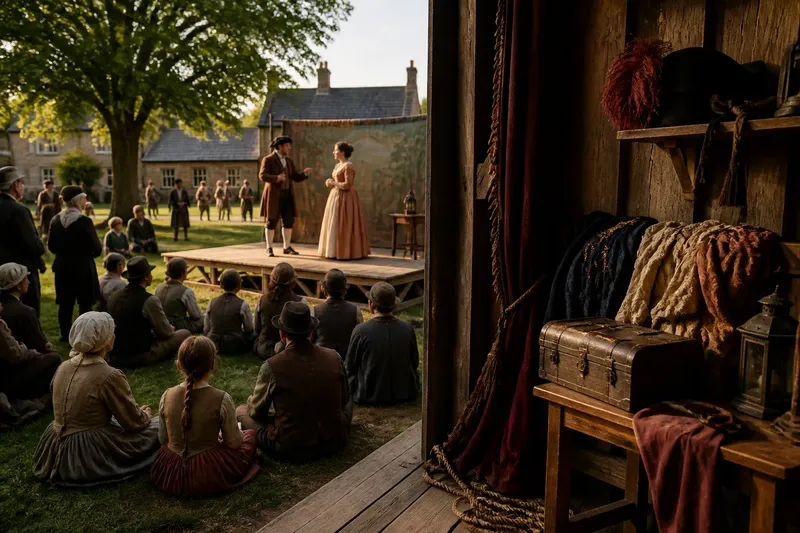
On a village green, a bell rings and people turn from their errands towards a small group of players. A few stop for the whole scene; others watch from the path before moving on. Local performance spaces have long included places like this, alongside halls and purpose-built stages. Their story is not a simple march from outdoors to indoors, but a changing relationship between performance and the places communities already used.
Without a particular town, date or record, it would be misleading to claim that every community followed the same sequence. What can be described more carefully is how different settings support different ways of gathering, and why a community might use a green, a borrowed room or a dedicated venue for different occasions.
Why did the village green suit local performance?
A green, market place or broad street could already be a place to meet, trade and mark a public occasion. A performance there needed little separation from everyday life. Passers-by could stop without planning an evening around a show, recognise familiar faces in the crowd, or catch only part of the action.
That informality shaped the event. People might gather in a loose ring rather than sit in rows, while daylight, weather, conversation and the surrounding buildings remained part of the experience. Performers had to make their words and gestures carry beyond a neat front row.
Open ground also made the occasion less predictable. A crowd could shift, a passing sound could interrupt a line, and some spectators might drift away. These conditions were not simply shortcomings: they connected the performance to the rhythms of a shared public place.
How did communities make performances repeatable?
A recurring performance could benefit from a recognisable playing area, even if no permanent theatre existed. A temporary booth, wagon or timber platform could mark where the action would happen. A cloth backdrop, a clear entrance and a familiar arrangement of props helped performers organise their work without closing off the surrounding space.
Imagine a travelling company returning to the same market square for a seasonal play. It brings a timber platform, a painted cloth and a simple prop table, then uses the same corner and entrance route as before. Spectators can recognise where to gather, and the players can repeat their entrances with less confusion; the square remains open to its ordinary uses once the performance ends.
A recurring arrangement could become part of local custom, but it did not have to turn the public place into a permanent stage.
What changed when a performance moved into a room?
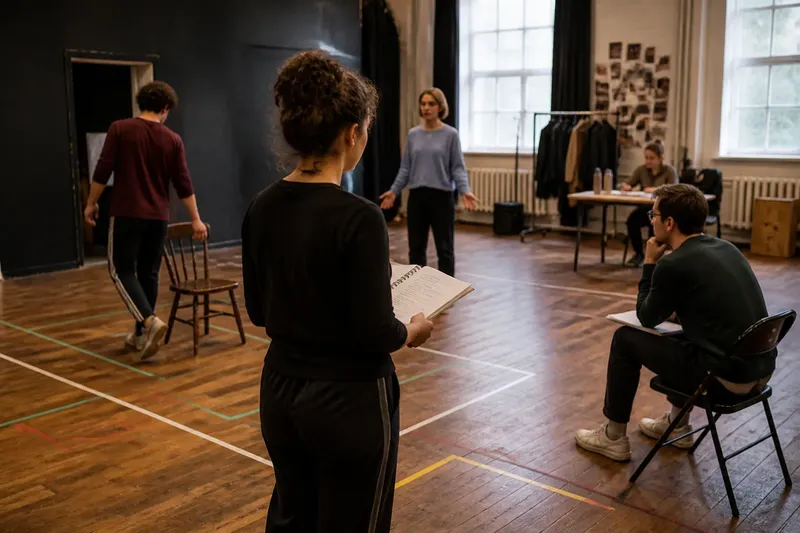
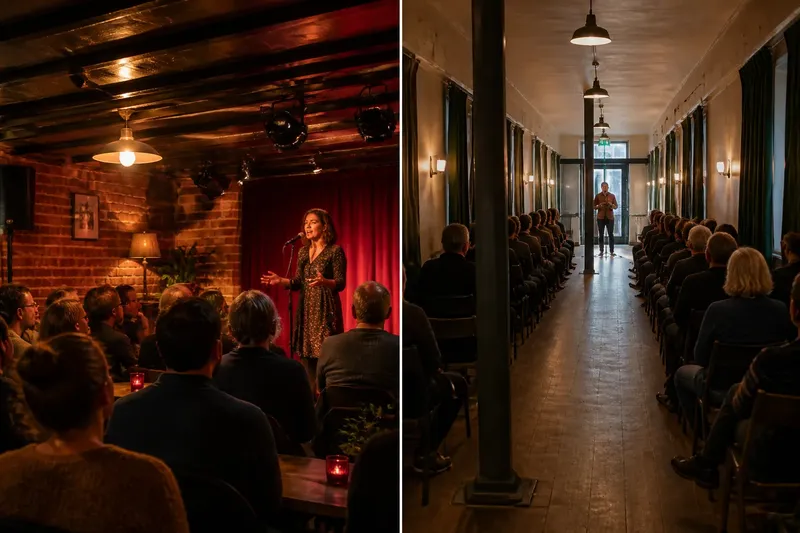
A borrowed hall or meeting room offered a different kind of boundary. Doors concentrated the gathering in one place, and benches or chairs could be arranged towards a playing area. Organisers could set a starting time and invite people to stay for the whole performance.
The room could shelter performers and spectators from weather, and its walls helped keep attention within the gathering. Yet the threshold also mattered: people had to enter, and attendance might depend on invitation, custom or access to the event. A public performance that anyone could happen upon and a room-based show were not interchangeable social occasions.
Some communities used rooms built for other purposes; others used outdoor spaces or temporary structures. The choice depended on the occasion and local circumstances, not on a universal timetable of progress.
What traditions did a dedicated venue make easier?
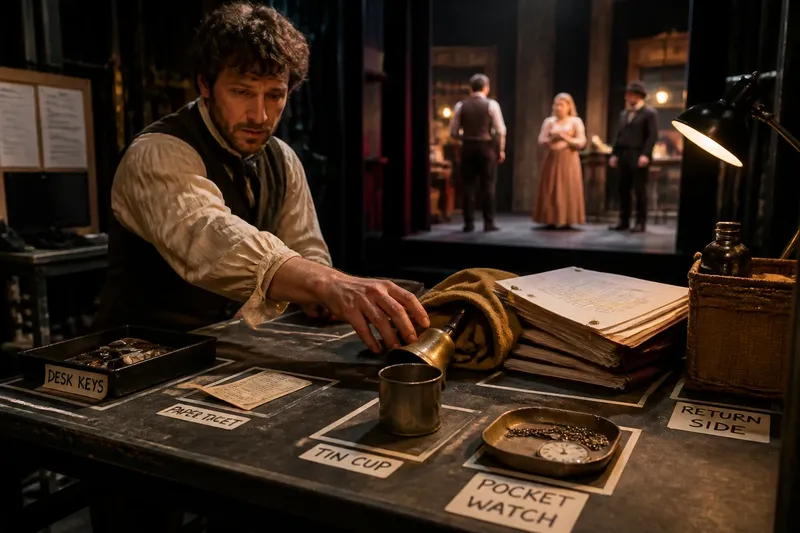
A building designed with performance in mind could bring together a playing area, audience space, storage and backstage entrances. These features gave organisers a familiar setting for rehearsals and presentations. A venue might still host meetings or celebrations, but a stage and its supporting spaces made performance a visible part of its use.
Repeated use could give the place its own local associations: a route through the room that regular visitors knew, a painted backdrop brought out for a seasonal show, or posters kept near the entrance. Such details are possibilities rather than a record of every venue; the particular history belongs to the people and place involved.
A dedicated room can support a continuing performance tradition, but the building alone does not create one. People do that by returning, organising and sharing the event.
What do people ask about local performance spaces?
Did every community build a theatre?
No. A community might use a hall, an outdoor gathering place or a temporary structure, depending on the event and what was available. A purpose-built venue was one possible arrangement, not an inevitable destination.
Why use a temporary platform outdoors?
A platform could mark the playing area and lift performers above nearby spectators. It offered a visible centre for an event while leaving the public space around it in use.
Did indoor performance replace outdoor performance?
Not as a universal rule: communities can use both settings for different occasions. A room gives an event a defined interior, while an outdoor gathering remains closely connected to its surroundings.
What makes a local performance tradition last?
A familiar place can help people return, but traditions also depend on organisers, performers and audiences continuing to take part. The form may change while the habit of gathering for performance carries on.
How should you describe a venue’s local history?
If you are writing about a particular hall, green or stage, start with evidence tied to that place: dated programmes, council records, local newspaper notices, photographs or accounts held by a community archive. Separate what the records establish from what you infer, and avoid presenting a general pattern as the venue’s own history.
Say you find a dated programme naming a play at a town hall, a photograph that appears to show the same room, and an undated local recollection of outdoor performances. You can state that the programme records the hall event and describe what is visible in the photograph, while presenting the green performance as a recollection rather than a dated fact. If the sources do not establish when one setting began or ended, leave that sequence open.
That care makes accounts of local performance spaces more useful: it honours the particular community without asking one place’s story to stand for every other one.